Table of Contents
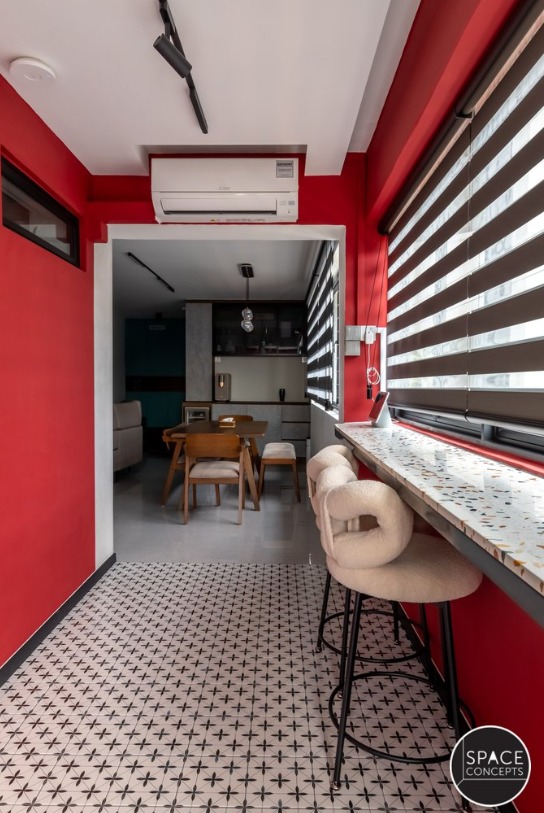
Interior design HDB projects begin with a simple truth most homeowners learn quickly: space is finite, but expectations rarely are. HDB flats are designed for efficiency, not excess, which means every square metre must work harder, smarter, and more flexibly than in larger private homes. The challenge is not merely to fit everything in, but to create a home that feels open, calm, and liveable without fighting against its physical limits.
Done well, interior design HDB solutions do not shrink ambition, but instead, create room to expand. Here are some tips on how to tackle interior design for HDBs with such a non-restrictive approach.
1 – Visualize How Spaces Will Be Used
The first principle of successful interior design HDB planning is understanding that space is not just measured in square footage, but in usability. Many homeowners focus on how large a room looks rather than how well it functions. A visually spacious living room that lacks storage, seating flexibility, or clear circulation quickly becomes impractical. In HDB flats, design decisions must prioritise movement and purpose. Furniture placement, sightlines, and transitions between spaces often matter more than decorative elements.
2 – Focus on Purposeful Layouts
Open-concept layouts are frequently promoted as the answer to small spaces, but they are not a universal fix. Knocking down walls without a clear plan can create awkward zones, noise issues, and a lack of privacy. Strategies for interior design in HDBs work best when openness is controlled rather than absolute. Partial partitions, sliding panels, or glass dividers allow light to travel while maintaining functional separation. The goal is adaptability, not emptiness.
3 – Make Living Space and Storage Space Work Together
Storage is the backbone of any well-executed interior design HDB project. Without adequate storage, even the most thoughtfully styled home will feel cramped within months. The key is integration. Storage should be embedded into architecture rather than added as an afterthought. Built-in cabinetry that follows wall lines, bench seating with concealed compartments, and platform beds with drawers turn necessary storage into structural features. When storage is invisible, space feels larger.
4 – When You Can’t Build Outwards, Look Upwards
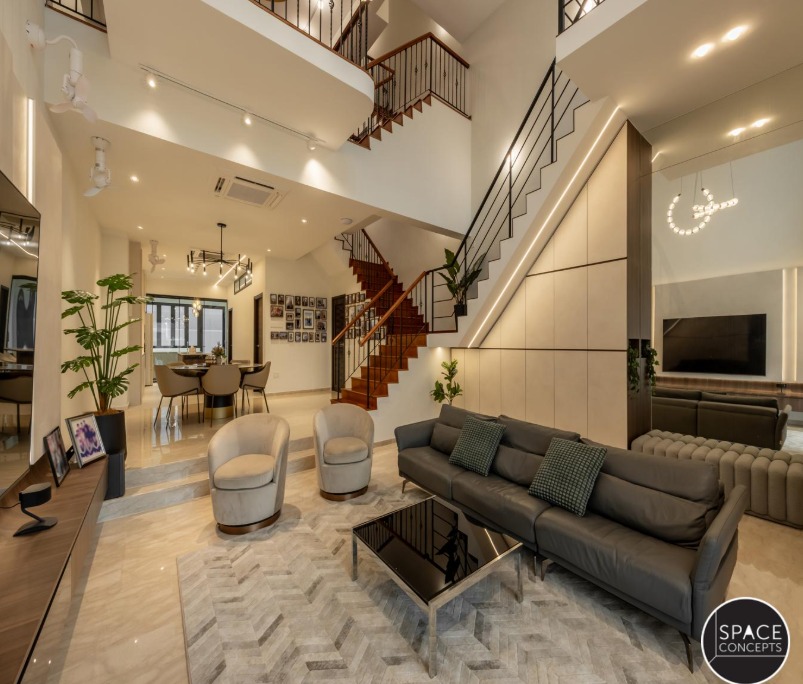
Vertical thinking is another essential trick. HDB flats often have ceiling heights that allow for upward expansion, yet many homeowners stop at eye level. Full-height cabinetry, overhead storage in kitchens, and tall wardrobes maximise volume without increasing footprint. Interior design HDB solutions that utilise vertical space reduce clutter at ground level, improving both movement and visual clarity.
5 – Remember the Importance of Lighting
Lighting plays a disproportionately large role in how small spaces are perceived. Poor lighting compresses space, while well-planned lighting expands it. Many HDB flats rely heavily on uniform ceiling lights, which flatten depth and create harsh shadows. Interior design HDB approaches benefit from layered lighting: ambient lighting for general brightness, task lighting for functionality, and accent lighting to add depth. Cove lighting, under-cabinet lights, and wall washers subtly stretch perceived boundaries without altering structure.
Mirrors are often cited as a quick fix for small spaces, but their effectiveness depends on placement. Randomly placed mirrors can create glare and confusion. Interior design HDB use of mirrors works best when they reflect light, greenery, or depth rather than clutter. A well-placed mirror can double perceived width or bring light into darker corners, but it must be intentional.
6 – Direct the Eye with Color
Colour strategy is another frequently misunderstood area. White is often treated as the default solution for small homes, but overuse can make spaces feel sterile rather than spacious. Interior design HDB palettes work best when they balance light tones with warmth and contrast. Soft neutrals, muted textures, and controlled colour accents create dimension without overwhelming the senses. The trick is consistency. Too many colour shifts fragment space, while a cohesive palette allows rooms to flow visually into one another.
7 – Make Sure Furniture Fits Into the Bigger Picture
Furniture selection demands restraint and precision. Oversized furniture is one of the fastest ways to suffocate a small flat. Yet choosing pieces that are too small can make a home feel temporary or under-furnished. Interior design HDB success lies in scale and proportion. Modular sofas, extendable dining tables, and nesting furniture adapt to different needs without permanently occupying space. Each piece should earn its place through function, not just appearance.
8 – A Single Room Can Serve Many Functions
Multi-functional spaces are not a trend in HDB homes; they are a necessity. Dining areas double as workspaces. Guest rooms become study rooms. Living rooms host exercise, entertainment, and relaxation. Interior design HDB planning must acknowledge this overlap from the start. Power points, lighting, and storage should support multiple uses rather than locking a room into a single purpose. Flexibility is the quiet luxury of small homes.
Technology integration is another area where minimal space demands foresight. Routers, charging stations, entertainment systems, and home office equipment need designated zones. Interior design HDB planning that ignores these needs results in exposed wires and improvised setups. Thoughtful cable management, built-in charging drawers, and concealed compartments preserve visual order without sacrificing convenience.
Tackling Specific-Use Areas Smartly
The kitchen, often the most space-constrained area, benefits greatly from smart interior design HDB thinking. Galley kitchens, L-shaped layouts, and compact islands can all work if circulation is respected. Appliances should be chosen based on actual usage, not aspirational cooking habits. Built-in appliances, pull-out pantry systems, and vertical storage solutions free up counter space, making even small kitchens feel efficient rather than cramped.
Bathrooms present their own challenges. Storage is limited, and clutter accumulates quickly. Interior design HDB bathrooms work best when storage is recessed, mirrors are used strategically, and fittings are chosen for compact efficiency. Wall-hung vanities and concealed cisterns create visual breathing room while improving ease of cleaning. In small bathrooms, simplicity and minimalism make a major difference both aesthetically and functionally.
Maintaining Uniformity Throughout a Home
Visual continuity across the home is another powerful tool. Different flooring materials in every room may look interesting in large houses, but in HDB flats, they fragment space. Interior design HDB schemes that use consistent flooring, aligned ceiling details, and repeated design elements create a sense of flow. When the eye moves uninterrupted, the home feels larger than it is.
A well-designed HDB home does not feel like a compromise. It feels intentional, where every corner serves a purpose, every element supports daily life, and nothing exists purely for show. Interior design for HDBs is ultimately about respect: respect for space, for function, and for the people who live within it. When minimal space is treated thoughtfully, it creates a sense of flow that in some ways can feel far more convenient than large expanses.
Unlock the True Potential of Your HDB Turn limited square footage into limitless living with intelligent, purpose-driven design. Partner with SPACE CONCEPTS DESIGN PTE LTD to create a home that balances efficiency, comfort, and style.