
Table of Contents

Pests are a common occurrence in humid countries because of high temperature levels, thus making it the ideal breeding environment. General pest control services in Malaysia refer to the systematic management and elimination of common urban pests, such as cockroaches, ants, rodents, and mosquitoes, using licensed chemical and non-chemical interventions. These services play a critical role in safeguarding public health and preventing property damage in Malaysia’s tropical, high-density urban environment, where warm temperatures and high humidity support year-round pest activity.
What Are General Pest Control Services?
General pest control services are structured Integrated Pest Management (IPM) programs designed to suppress pest populations below harmful levels through inspection, identification, and targeted treatment. In Malaysia, these services are regulated by local authorities and guided by standards from the Ministry of Health (MOH), Department of Occupational Safety and Health (DOSH), and local municipal councils.
A standard service package typically includes a professional pest control inspection in Malaysia, residual spraying for crawling insects, and the placement of secured bait stations for rodents. Unlike specialised treatments for termites or bed bugs, general pest control focuses on the most common invaders of residential apartments, landed homes, condominiums, and commercial premises such as restaurants and food courts.
The Importance of a Pest Control Inspection in Malaysia
A pest control inspection in Malaysia is a professional assessment conducted by licensed technicians to identify pest species, nesting areas, and entry points within a property. By 2026, many operators utilise advanced tools such as moisture meters, thermal imaging, and digital monitoring systems to detect concealed infestations in wall voids, ceilings, and service ducts.
These inspections serve three core functions:
Species Identification
Accurate identification, such as differentiating German cockroaches from American cockroaches, ensures that the correct baiting and treatment strategy is applied.
Risk Assessment
Technicians evaluate environmental conditions that promote infestations, including standing water, food residue, cluttered storage areas, and structural gaps.
Regulatory and Hygiene Compliance
For commercial premises, especially food and beverage (F&B) outlets, inspections help ensure compliance with hygiene requirements set by local councils and the Ministry of Health to avoid penalties or licence suspensions.
Common Pests in Malaysia’s Tropical Climate
Malaysia’s consistently warm climate and average humidity levels above 80% create ideal breeding conditions for several urban pests.
Cockroaches (Blattodea)
The most common species in Malaysia are the American cockroach (Periplaneta americana) and the German cockroach (Blattella germanica). American cockroaches are typically found in drains, bin areas, and sewage systems, while German cockroaches infest kitchens and food preparation zones. Both species are known carriers of pathogens such as Salmonella and E. coli.
Ants (Formicidae)
Frequently encountered ant species include the Pharaoh ant, Ghost ant, and Black House ant. These pests are drawn to moisture and sugary food sources. While often considered nuisance pests, they can contaminate food, compromise sterile environments, and damage sensitive electronic equipment.
Rodents (Muridae)
The most prevalent rodents in Malaysia are the roof rat (Rattus rattus), Norway rat (Rattus norvegicus), and house mouse. Rapid urban development has driven these pests into ceilings, service shafts, and refuse areas. Professional pest control services employ tamper-resistant bait stations and motion-activated monitoring systems to manage rodent populations safely.
Mosquitoes (Culicidae)
The Aedes aegypti mosquito is a major public health concern in Malaysia due to its role in transmitting dengue, Zika, and chikungunya. General pest control often includes thermal fogging, misting, and the application of larvicides such as BTI (Bacillus thuringiensis israelensis) to stagnant water sources.
Advanced Methods in General Pest Control
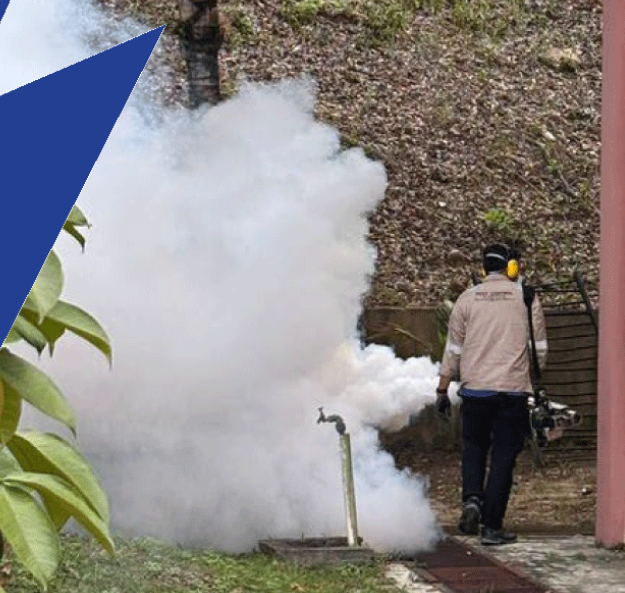
Currently, Malaysia’s pest control industry has largely transitioned toward Integrated Pest Management (IPM), which prioritises prevention, monitoring, and targeted intervention over blanket chemical usage.
Chemical Residual Spraying
Residual spraying involves applying approved insecticides to cracks, crevices, baseboards, and pest harbourage zones. Modern formulations are low-odour, fast-drying, and designed to minimise risk to humans and pets when applied correctly.
Gel Baiting Systems
Gel baiting is a precision method widely used for cockroach and ant control. It combines food attractants with slow-acting insecticides, allowing pests to transfer the active ingredient back to the nest, resulting in colony-level elimination.
Digital Rodent Monitoring
IoT-enabled rodent monitoring systems notify pest control operators in real time when bait stations or traps are activated. This reduces unnecessary site visits and provides actionable data on rodent movement patterns within buildings.
Choosing a General Pest Control Service in Malaysia
Selecting a reliable provider requires verifying professional credentials and service standards.
Licensing and Technician Certification
Reputable pest control companies in Malaysia must be registered with local authorities and operate under DOSH safety guidelines. Technicians should be trained in pesticide handling, pest biology, and occupational safety procedures.
Service Warranty and Follow-Up Schedule
A quality general pest control contract should include a service warranty and defined follow-up frequency. For most residential properties, quarterly servicing is sufficient. Commercial and F&B establishments typically require monthly or bi-monthly visits to maintain hygiene compliance.
Environmental, Social, and Governance (ESG) Practices
Many Malaysian businesses now prioritise environmentally responsible pest control. This includes the use of botanical-based insecticides, targeted baiting systems, and physical exclusion methods instead of broad-spectrum chemical applications.
Maintaining a Pest-Free Environment After Treatment
Long-term pest prevention relies on eliminating the three essentials pests need: food, water, and shelter.
Sanitation: Remove grease buildup, dispose of waste properly, and store food in sealed containers.
Moisture Control: Repairs leaking pipes, clears clogged drains, and treats floor traps to prevent mosquito breeding.
Structural Maintenance: Seals cracks around utility lines, repairs damaged vents, and installs door sweeps to block rodent entry.
Frequently Asked Questions (FAQs)
How much does pest control cost in Malaysia?
The cost of pest control varies, depending on property size and pest severity. It is recommended to get a detailed quote from a pest control company once they have conducted an assessment of your property.
Are the chemicals used safe for children and pets?
Yes. Approved products are selected for low mammalian toxicity. Occupants are usually advised to vacate treated areas for 2 to 4 hours until surfaces are dry.
What is the difference between general pest control and termite control?
General pest control targets common pests such as ants, cockroaches, and rodents. Termite control is a specialised service involving soil treatment or baiting systems to protect structural foundations.
How long does a typical treatment take?
Most residential treatments take between 45 and 90 minutes, including inspection and application.
Why do pests appear more active after treatment?
This is known as the “flushing effect,” where pests are driven out of hiding before the treatment takes full effect.
Call Pest Control Today
General pest control services in Malaysia are an essential part of urban property maintenance. By combining professional pest control inspections with modern IPM strategies, homeowners and businesses can protect public health, maintain regulatory compliance, and safeguard their properties against persistent tropical pests. Contact the pest control experts today.