
Table of Contents
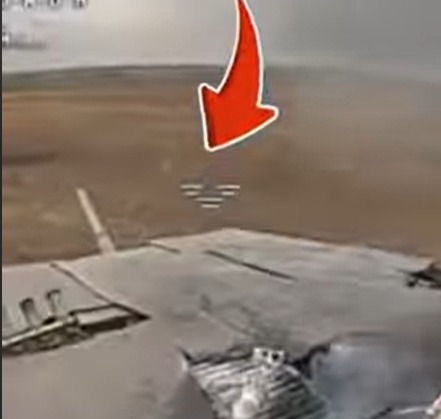
Modern warfare is evolving at an unprecedented pace. What once depended primarily on heavy armor, artillery, and troop strength is now increasingly shaped by advanced technology. A recent incident involving an FPV (First Person View) drone targeting a tank highlights how battlefield dynamics are shifting toward precision, innovation, and unmanned systems.
The event has sparked widespread discussion among defense analysts and military observers. It serves as yet another example of how relatively low-cost technologies can challenge traditionally dominant military assets.
What Is an FPV Drone?
FPV drones are remotely operated unmanned aerial vehicles that provide the operator with a real-time video feed from the drone’s perspective. Originally popular in racing and hobbyist communities, these drones have been adapted for military use.
Unlike conventional military drones, FPV drones are:
- Compact and highly maneuverable
- Relatively inexpensive
- Capable of carrying small explosive or incendiary payloads
- Controlled in real time for precise targeting
Their affordability and flexibility make them particularly effective in asymmetric warfare scenarios.
The Incident: Drone vs Armored Vehicle
In the reported case, an FPV drone equipped with a specialized incendiary charge targeted a tank positioned on the battlefield. The drone maneuvered toward its objective with precision, demonstrating the increasing sophistication of drone-based strike capabilities.
While details surrounding the final impact and operational outcome remain subject to verification, the incident underscores a broader strategic reality: heavy armored vehicles are no longer invulnerable simply because of their size and firepower.
Even when attacks do not achieve full destruction, they can still:
- Damage external systems
- Disable optics or communication equipment
- Force repositioning
- Create psychological pressure
The symbolic power of such attacks is often as significant as their physical impact.
Why Tanks Are Facing New Challenges
For decades, tanks have been central to ground warfare. Designed to withstand artillery and direct fire, they are heavily armored and technologically advanced. However, drone warfare introduces new vulnerabilities.
FPV drones can:
- Approach from above, targeting weaker top armor
- Exploit blind spots
- Operate at low cost compared to traditional anti-tank systems
- Be deployed in large numbers
This shift forces militaries to rethink armored doctrine. Protection is no longer only about thicker armor; it now involves electronic warfare, drone detection systems, and active protection mechanisms.
The Role of Technology in Shaping Outcomes
The broader takeaway from this incident is that technology is increasingly determining battlefield outcomes. The balance of power is shifting from sheer mass and firepower toward:
- Speed of adaptation
- Technological integration
- Real-time intelligence
- Innovation cycles
Nations that can rapidly develop and deploy new technologies gain a decisive advantage. Drone warfare, electronic countermeasures, and AI-assisted targeting systems are becoming central pillars of modern defense strategies.
Psychological and Strategic Impact
Beyond physical damage, drone attacks carry a psychological dimension. Knowing that a small, hard-to-detect device can strike at any moment changes the mindset of soldiers and commanders alike.
This leads to:
- Increased defensive caution
- Resource diversion toward counter-drone systems
- Greater emphasis on camouflage and mobility
In many ways, the battlefield has become more transparent and interconnected. Surveillance and strike capabilities are merging into compact, adaptable platforms.
The Future of Drone Warfare
As FPV drone technology continues to advance, we can expect:
- Improved guidance systems
- Enhanced payload precision
- Integration with AI-assisted targeting
- Stronger counter-drone defense technologies
The contest between offensive drone capabilities and defensive countermeasures will likely define the next era of ground warfare.
Conclusion
The reported FPV drone strike against a tank illustrates a powerful reality: warfare is no longer defined solely by heavy machinery and traditional force projection. Instead, agility, innovation, and technological sophistication are reshaping the battlefield.
Whether successful or not in specific cases, such drone operations demonstrate that modern conflicts are increasingly determined by technological evolution. In today’s strategic environment, adaptation may be the most critical weapon of all.